Which size is right for your space?
- Living room (above sofa): 48x32
- Bedroom (above headboard): 36x24 or 48x32
- Dining room: 36x24 or 48x32, depending on wall size
- Home office or den: 30x20 or 36x24
- Large foyer or entryway: 48x32
- Hallway, bathroom, or gallery wall: 18x12 or 24x16
When in doubt, go bigger than you think. The art, including any frame, should fill about ⅔ the width of the furniture beneath it. Sizes listed are the photograph itself; framed paper prints, with a 2" mat and frame, are about 3–5" larger in each direction.
See it on your wall before you order
Use the buttons below the image:
- Wall Preview: upload a photo of your room and see this print on your wall in your chosen size and frame.
- Live Preview AR: on your phone or tablet, point your camera at your wall and see the print there in real time.
Framed prints arrive ready to hang
Framed paper prints are matted with a 2" white mat and protected by non-glare acrylic, so the image stays clear without reflections from windows or lights. Acrylic is lighter and safer to ship than glass, and every framed print arrives with hanging hardware already attached.
MetalPrints with a float mount or frame also arrive ready to hang.
Questions about size, material, or framing? See the FAQ or email me a photo of your wall, and I'll suggest a size and finish.
About this photograph
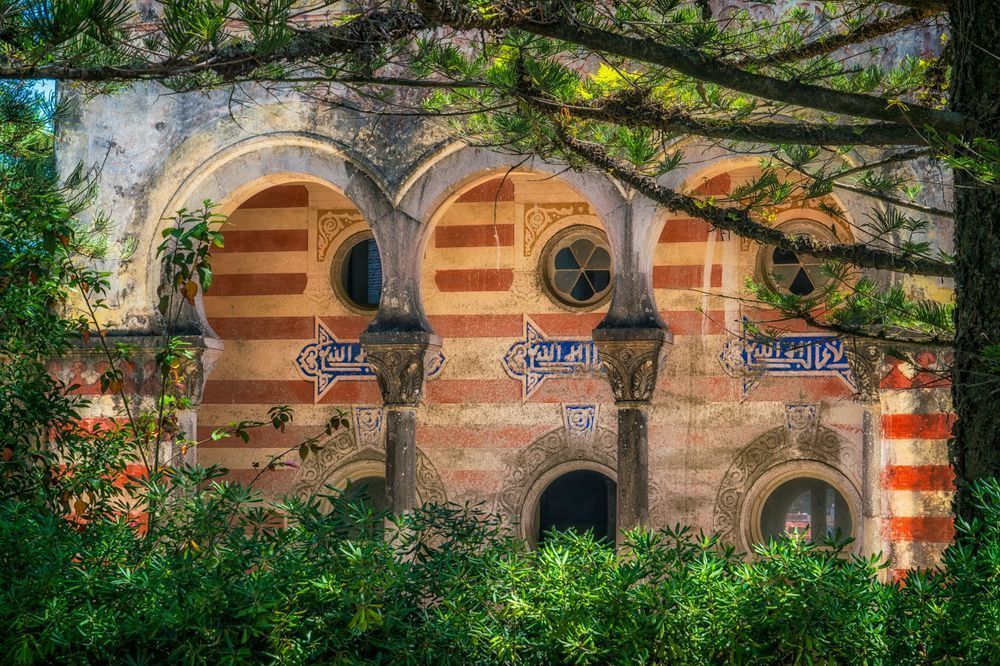
Quinta do Relógio sits just outside the more famous Quinta da Regaleira in Sintra, and it's one of Portugal's finest examples of Moorish Revival architecture. The inscription above the main entrance—"Wa lā ghāliba illā-llāh" (There is no victor but God)—was the motto of the Emir of Granada, a deliberate reference to the Islamic heritage that Portuguese Romanticism loved to romanticize.
I photographed this during Sintra's typical misty weather, which adds to the atmosphere of abandonment. The palace has been left to decay for decades, with vegetation slowly reclaiming the structure. What drew me to this composition was how the manicured gardens in the foreground contrast with the crumbling façade—you can see both the original vision and what time does to even the grandest architecture.
Sintra became a UNESCO World Heritage site partly because of these 19th-century Romantic estates, where Portuguese nobility built fantasy palaces inspired by Moorish, Gothic, and Renaissance styles. Quinta do Relógio represents that era's fascination with creating architectural theater, though unlike its better-maintained neighbors, this one shows what happens when the theater closes.
The weathered architecture and encroaching nature create a contemplative quality that works well in spaces that evoke a sense of history and mystery.