Which size is right for your space?
- Living room (above sofa): 48x32
- Bedroom (above headboard): 36x24 or 48x32
- Dining room: 36x24 or 48x32, depending on wall size
- Home office or den: 30x20 or 36x24
- Large foyer or entryway: 48x32
- Hallway, bathroom, or gallery wall: 18x12 or 24x16
When in doubt, go bigger than you think. The art, including any frame, should fill about ⅔ the width of the furniture beneath it. Sizes listed are the photograph itself; framed paper prints, with a 2" mat and frame, are about 3–5" larger in each direction.
See it on your wall before you order
Use the buttons below the image:
- Wall Preview: upload a photo of your room and see this print on your wall in your chosen size and frame.
- Live Preview AR: on your phone or tablet, point your camera at your wall and see the print there in real time.
Framed prints arrive ready to hang
Framed paper prints are matted with a 2" white mat and protected by non-glare acrylic, so the image stays clear without reflections from windows or lights. Acrylic is lighter and safer to ship than glass, and every framed print arrives with hanging hardware already attached.
MetalPrints with a float mount or frame also arrive ready to hang.
Questions about size, material, or framing? See the FAQ or email me a photo of your wall, and I'll suggest a size and finish.
About this photograph
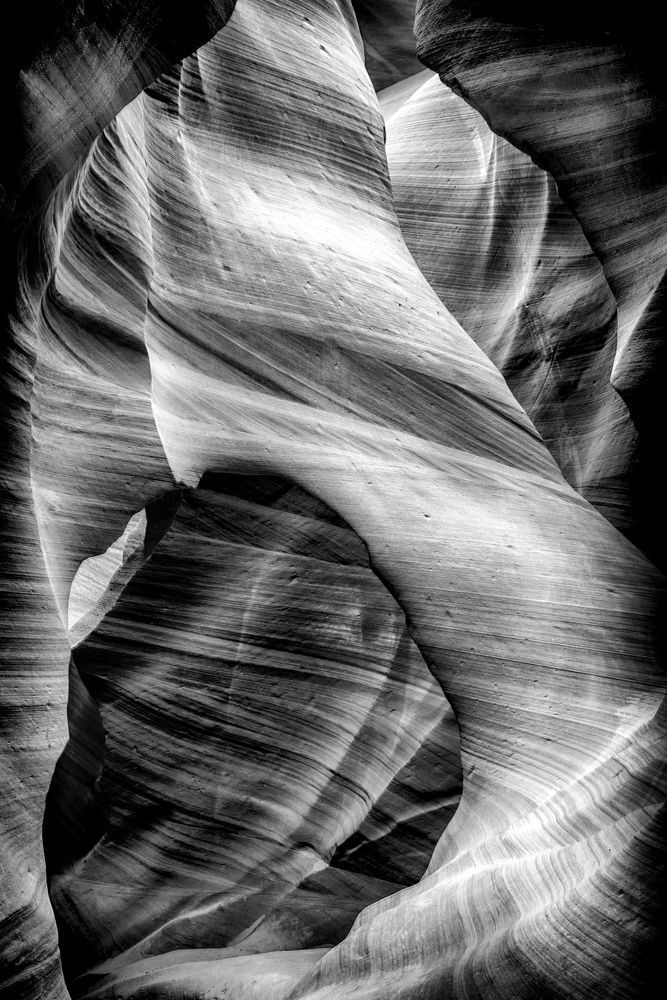
Lower Antelope Canyon's slot passages occasionally reveal natural arches where erosion has created openings in the curved sandstone walls. These arches frame views of the canyon's opposite walls, creating compositions where water-carved rock creates windows within windows.
Converting to black and white emphasizes the sculptural quality of these formations: the flowing curves, the layered strata visible in canyon walls, the way light enters from above and reflects off smooth surfaces. What would be warm orange-red Navajo sandstone becomes a range of grays that reveals texture and geological process more clearly than color.
The extreme contrast typical of slot canyons—bright light from narrow openings above versus deep shadows in carved recesses—becomes a study in tonal gradation. Black and white suits this subject because it emphasizes form over the famous sandstone colors: the swirling erosion patterns, the polished surfaces created by flash floods, the layered deposition all become more apparent when color doesn't dominate the visual experience.
Monochrome treatment emphasizes sculptural forms and tonal range in Lower Antelope Canyon's carved archways.