Which size is right for your space?
- Living room (above sofa): 48x32
- Bedroom (above headboard): 36x24 or 48x32
- Dining room: 36x24 or 48x32, depending on wall size
- Home office or den: 30x20 or 36x24
- Large foyer or entryway: 48x32
- Hallway, bathroom, or gallery wall: 18x12 or 24x16
When in doubt, go bigger than you think. The art, including any frame, should fill about ⅔ the width of the furniture beneath it. Sizes listed are the photograph itself; framed paper prints, with a 2" mat and frame, are about 3–5" larger in each direction.
See it on your wall before you order
Use the buttons below the image:
- Wall Preview: upload a photo of your room and see this print on your wall in your chosen size and frame.
- Live Preview AR: on your phone or tablet, point your camera at your wall and see the print there in real time.
Framed prints arrive ready to hang
Framed paper prints are matted with a 2" white mat and protected by non-glare acrylic, so the image stays clear without reflections from windows or lights. Acrylic is lighter and safer to ship than glass, and every framed print arrives with hanging hardware already attached.
MetalPrints with a float mount or frame also arrive ready to hang.
Questions about size, material, or framing? See the FAQ or email me a photo of your wall, and I'll suggest a size and finish.
About this photograph
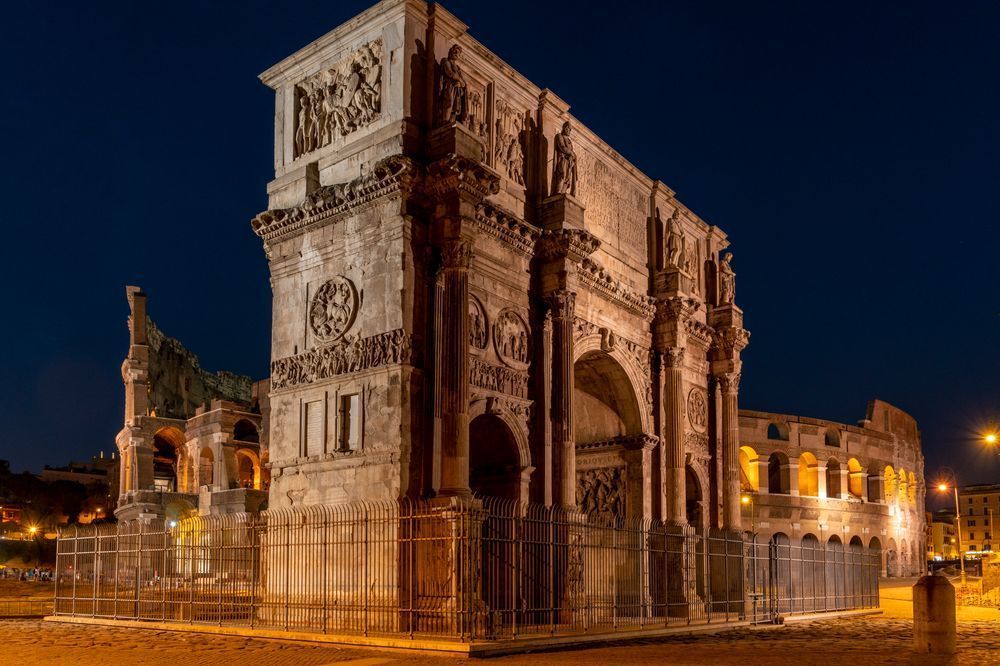
I photographed the Arch of Constantine at night to capture the drama that floodlighting brings to Roman monuments. Built in 315 AD to commemorate Constantine's victory at the Milvian Bridge, it's one of Rome's best-preserved triumphal arches—and also one of history's great examples of architectural recycling. Much of its decoration was stripped from earlier monuments, reused, and repurposed for Constantine's propaganda.
The night shot lets you see details that get lost in daylight tourist crowds: the relief panels depicting battle scenes, the columns that frame each archway, the way the Colosseum rises in the background, creating that layered sense of Rome's compressed history. I positioned myself to show both monuments in relationship to each other—they're only about 150 meters apart, both part of the ancient triumphal route.
What strikes me about shooting Roman ruins at night is how the modern lighting transforms them. These structures were meant to be seen in Mediterranean sunlight. Yet the dramatic uplighting creates a kind of grandeur, emphasizing the mass and monumentality in ways the Romans never intended.
The contrast between the illuminated arch and the night sky emphasizes the architecture's sculptural quality.