Which size is right for your space?
- Living room (above sofa): 48x32
- Bedroom (above headboard): 36x24 or 48x32
- Dining room: 36x24 or 48x32, depending on wall size
- Home office or den: 30x20 or 36x24
- Large foyer or entryway: 48x32
- Hallway, bathroom, or gallery wall: 18x12 or 24x16
When in doubt, go bigger than you think. The art, including any frame, should fill about ⅔ the width of the furniture beneath it. Sizes listed are the photograph itself; framed paper prints, with a 2" mat and frame, are about 3–5" larger in each direction.
See it on your wall before you order
Use the buttons below the image:
- Wall Preview: upload a photo of your room and see this print on your wall in your chosen size and frame.
- Live Preview AR: on your phone or tablet, point your camera at your wall and see the print there in real time.
Framed prints arrive ready to hang
Framed paper prints are matted with a 2" white mat and protected by non-glare acrylic, so the image stays clear without reflections from windows or lights. Acrylic is lighter and safer to ship than glass, and every framed print arrives with hanging hardware already attached.
MetalPrints with a float mount or frame also arrive ready to hang.
Questions about size, material, or framing? See the FAQ or email me a photo of your wall, and I'll suggest a size and finish.
About this photograph
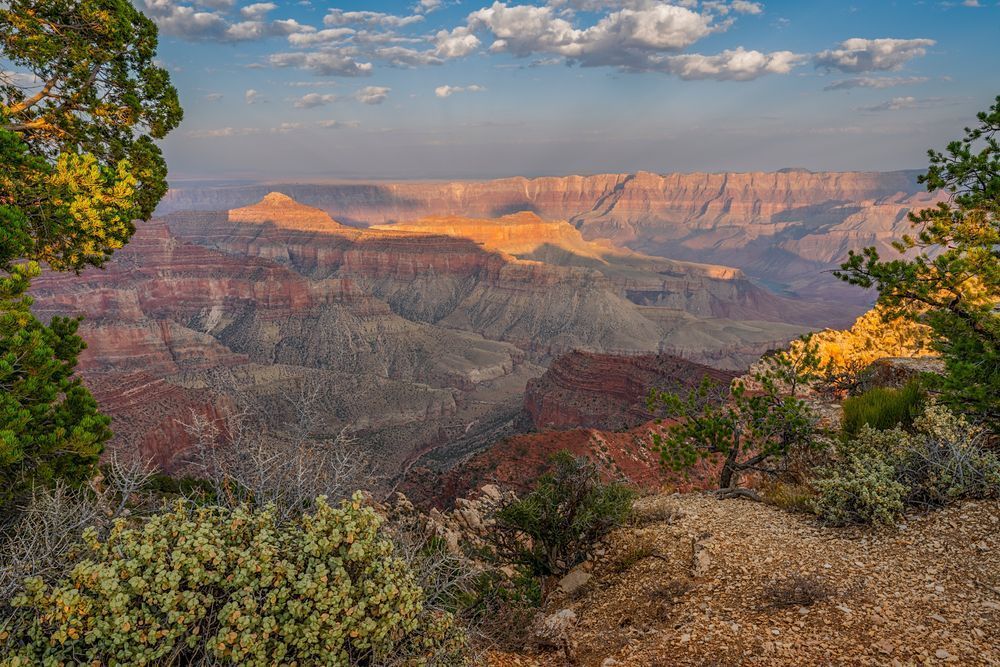
Cape Royal on the North Rim offers dramatic eastward views across the canyon toward the South Rim. This shot was taken near the Angel's Window feature but focuses on the broader canyon vista rather than the natural arch itself, emphasizing the layered buttes and ridges extending into the distance.
Late afternoon sun rakes across the formations from the west, creating that interplay of illuminated faces and deep shadows that reveals the Grand Canyon's complex topography. You can see multiple geological formations—the rim's Kaibab limestone, the Coconino sandstone cliffs below, the Hermit shale slopes, and deeper still the Supai Group's red ledges.
The challenge was capturing the immense scale while maintaining detail across the tonal range—bright sunlit cliffs, shadowed recesses, and the atmosphere that creates depth through aerial perspective. The stratified geology becomes visible through those light-and-shadow transitions that change throughout the afternoon.
Directional afternoon light emphasizes geological layering and reveals the canyon's dimensional complexity.