Which size is right for your space?
- Living room (above sofa): 48x32
- Bedroom (above headboard): 36x24 or 48x32
- Dining room: 36x24 or 48x32, depending on wall size
- Home office or den: 30x20 or 36x24
- Large foyer or entryway: 48x32
- Hallway, bathroom, or gallery wall: 18x12 or 24x16
When in doubt, go bigger than you think. The art, including any frame, should fill about ⅔ the width of the furniture beneath it. Sizes listed are the photograph itself; framed paper prints, with a 2" mat and frame, are about 3–5" larger in each direction.
See it on your wall before you order
Use the buttons below the image:
- Wall Preview: upload a photo of your room and see this print on your wall in your chosen size and frame.
- Live Preview AR: on your phone or tablet, point your camera at your wall and see the print there in real time.
Framed prints arrive ready to hang
Framed paper prints are matted with a 2" white mat and protected by non-glare acrylic, so the image stays clear without reflections from windows or lights. Acrylic is lighter and safer to ship than glass, and every framed print arrives with hanging hardware already attached.
MetalPrints with a float mount or frame also arrive ready to hang.
Questions about size, material, or framing? See the FAQ or email me a photo of your wall, and I'll suggest a size and finish.
About this photograph
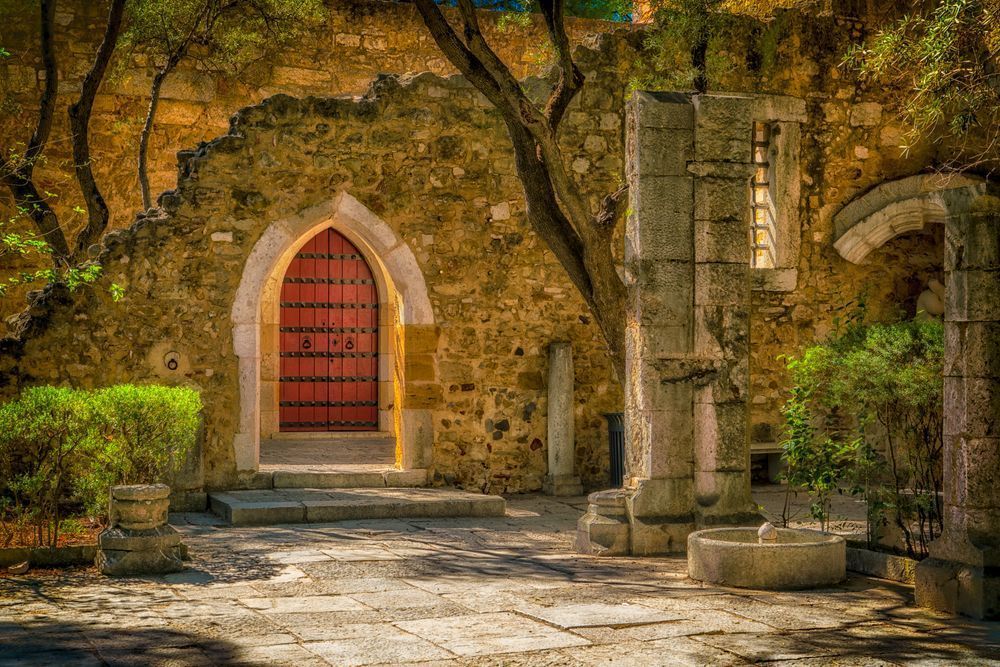
São Jorge Castle sits on Lisbon's highest hill, and it's been a fortification since at least the 2nd century BC—Phoenicians, Romans, Visigoths, Moors, and, finally, Portuguese Christians have all built on this strategic position. What you see now is mostly the result of multiple reconstructions, with the most recent restoration in the 1930s being somewhat controversial for the extent to which it "improved" the ruins.
I was drawn to this courtyard doorway because it captures that layered history—medieval stonework, the Moorish-influenced archways, the red door. The vegetation growing from the walls isn't decorative; it's what happens when stone structures sit exposed to Lisbon's Atlantic weather for centuries.
The lighting was ideal that day—strong enough to bring out the texture of the weathered stone but not so harsh as to kill the detail in the shadows. I composed it to show the contrast between the rough fortress walls and the domestic touches of the doorway, which transition from military architecture to a more human-scaled scale.
The warm stone tones and architectural details work well in spaces that call for a sense of Mediterranean character and historical depth.