Which size is right for your space?
- Living room (above sofa): 48x32
- Bedroom (above headboard): 36x24 or 48x32
- Dining room: 36x24 or 48x32, depending on wall size
- Home office or den: 30x20 or 36x24
- Large foyer or entryway: 48x32
- Hallway, bathroom, or gallery wall: 18x12 or 24x16
When in doubt, go bigger than you think. The art, including any frame, should fill about ⅔ the width of the furniture beneath it. Sizes listed are the photograph itself; framed paper prints, with a 2" mat and frame, are about 3–5" larger in each direction.
See it on your wall before you order
Use the buttons below the image:
- Wall Preview: upload a photo of your room and see this print on your wall in your chosen size and frame.
- Live Preview AR: on your phone or tablet, point your camera at your wall and see the print there in real time.
Framed prints arrive ready to hang
Framed paper prints are matted with a 2" white mat and protected by non-glare acrylic, so the image stays clear without reflections from windows or lights. Acrylic is lighter and safer to ship than glass, and every framed print arrives with hanging hardware already attached.
MetalPrints with a float mount or frame also arrive ready to hang.
Questions about size, material, or framing? See the FAQ or email me a photo of your wall, and I'll suggest a size and finish.
About this photograph
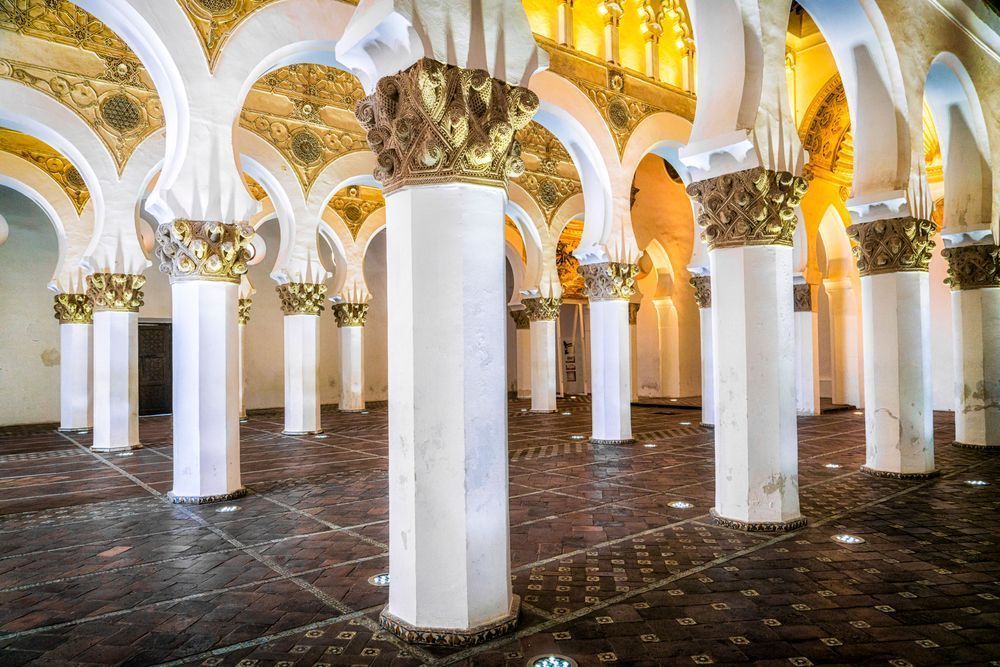
I photographed these columns at Santa María la Blanca to emphasize the rhythm created by the repetition of octagonal pillars supporting horseshoe arches down the length of the nave. The Mudéjar style is all about pattern and geometry, and this building showcases it beautifully: Islamic decorative traditions applied to what was originally a Jewish place of worship, later converted to a Christian church.
The lighting was tricky. I wanted to capture the warmth of the white plasterwork without losing the three-dimensional quality of the carved capitals. The columns create natural frames within frames, leading your eye deeper into the space and emphasizing the building's surprising length.
What's remarkable about Santa María la Blanca is how it embodies Toledo's medieval character as a city where Christian, Jewish, and Muslim communities coexisted and influenced each other's art and architecture. The building itself underwent multiple transformations—12th-century synagogue, 15th-century church, military barracks, and now a monument—each layer adding to its history.
The geometric precision and warm tones give this image a meditative quality, with the repeating arches creating visual depth.