Which size is right for your space?
- Living room (above sofa): 48x32
- Bedroom (above headboard): 36x24 or 48x32
- Dining room: 36x24 or 48x32, depending on wall size
- Home office or den: 30x20 or 36x24
- Large foyer or entryway: 48x32
- Hallway, bathroom, or gallery wall: 18x12 or 24x16
When in doubt, go bigger than you think. The art, including any frame, should fill about ⅔ the width of the furniture beneath it. Sizes listed are the photograph itself; framed paper prints, with a 2" mat and frame, are about 3–5" larger in each direction.
See it on your wall before you order
Use the buttons below the image:
- Wall Preview: upload a photo of your room and see this print on your wall in your chosen size and frame.
- Live Preview AR: on your phone or tablet, point your camera at your wall and see the print there in real time.
Framed prints arrive ready to hang
Framed paper prints are matted with a 2" white mat and protected by non-glare acrylic, so the image stays clear without reflections from windows or lights. Acrylic is lighter and safer to ship than glass, and every framed print arrives with hanging hardware already attached.
MetalPrints with a float mount or frame also arrive ready to hang.
Questions about size, material, or framing? See the FAQ or email me a photo of your wall, and I'll suggest a size and finish.
About this photograph
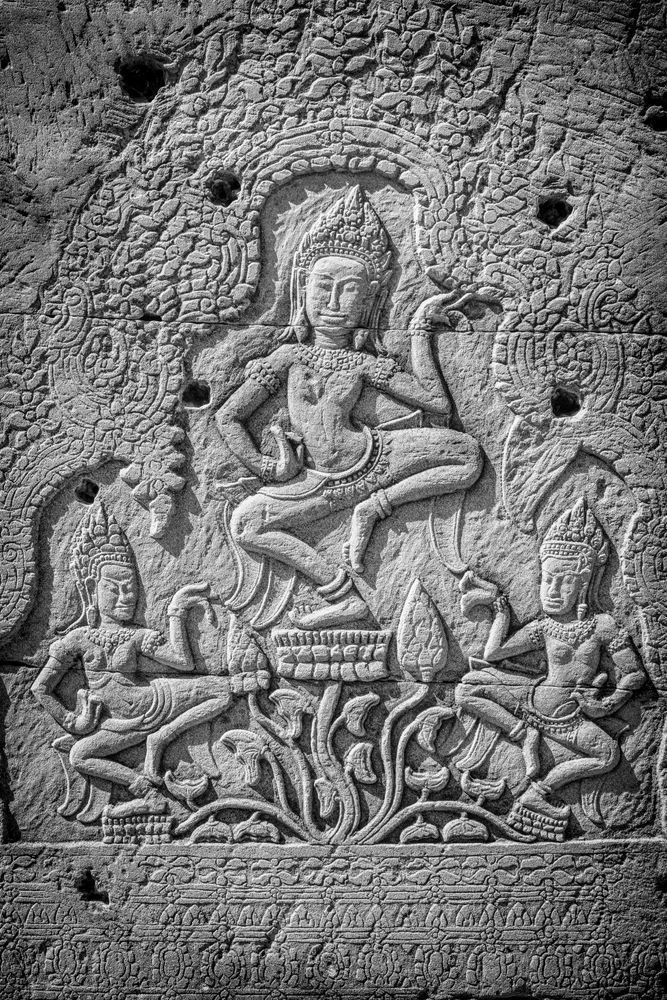
Apsara dancer reliefs at Angkor Wat showcase Khmer artistic mastery—intricate carved details depicting celestial dancers in elaborate costumes and graceful poses. Converting to black and white emphasizes the sculptural quality: the depth of carving, the interplay of light and shadow across the relief surface, the textural detail in stone weathered by centuries of tropical climate.
The pockmarks visible across the relief are bullet holes from the Khmer Rouge era when these ancient sculptures were used for target practice—physical scars from Cambodia's recent traumatic history layered onto artwork nearly a thousand years old. This damage adds another temporal dimension to the piece: ancient craftsmanship, colonial-era documentation, modern conflict, contemporary preservation.
Monochrome treatment removes the sandstone's warm color, focusing attention on form and detail. The contrast between deeply carved recesses and raised surfaces defines the figures' poses and elaborate ornamentation, while the weathering and damage become part of the visual narrative rather than distractions.
Black and white emphasizes sculptural detail and historical layering in these damaged Angkor Wat apsara reliefs.