Which size is right for your space?
- Living room (above sofa): 48x32
- Bedroom (above headboard): 36x24 or 48x32
- Dining room: 36x24 or 48x32, depending on wall size
- Home office or den: 30x20 or 36x24
- Large foyer or entryway: 48x32
- Hallway, bathroom, or gallery wall: 18x12 or 24x16
When in doubt, go bigger than you think. The art, including any frame, should fill about ⅔ the width of the furniture beneath it. Sizes listed are the photograph itself; framed paper prints, with a 2" mat and frame, are about 3–5" larger in each direction.
See it on your wall before you order
Use the buttons below the image:
- Wall Preview: upload a photo of your room and see this print on your wall in your chosen size and frame.
- Live Preview AR: on your phone or tablet, point your camera at your wall and see the print there in real time.
Framed prints arrive ready to hang
Framed paper prints are matted with a 2" white mat and protected by non-glare acrylic, so the image stays clear without reflections from windows or lights. Acrylic is lighter and safer to ship than glass, and every framed print arrives with hanging hardware already attached.
MetalPrints with a float mount or frame also arrive ready to hang.
Questions about size, material, or framing? See the FAQ or email me a photo of your wall, and I'll suggest a size and finish.
About this photograph
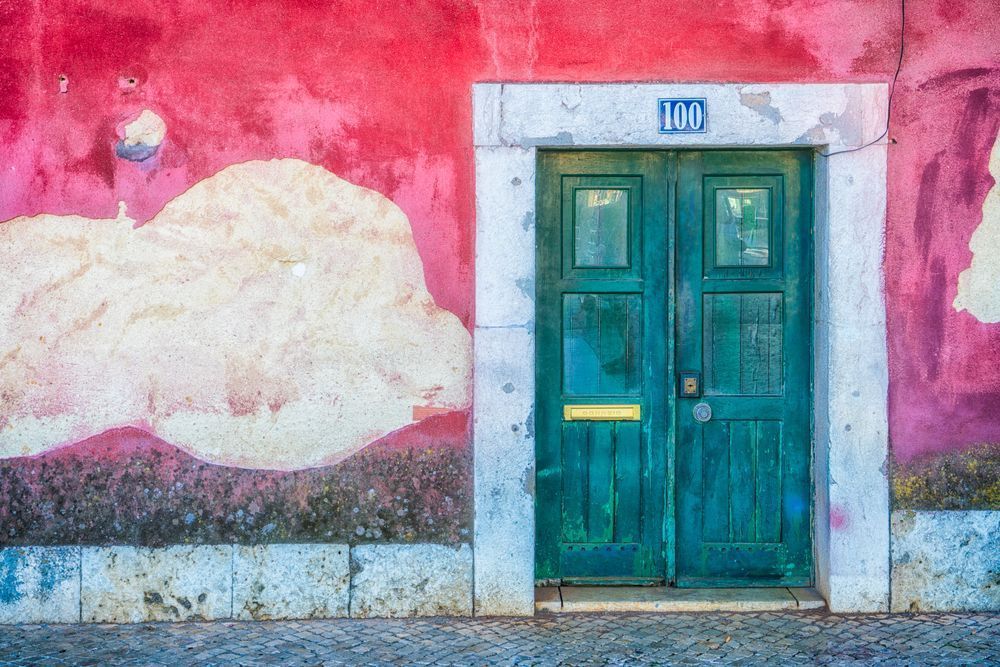
I walked past this building in Lisbon's port area several times before the light was right. The harsh midday sun washes out the colors on these old facades, so I waited until late afternoon when the building was in shadow, and the reds would show their full saturation.
What caught my eye was the layering of decay and use: the deep red paint peeling to reveal white plaster underneath, the worn green door with its brass "CORREIO" (mail) slot still in place, and that crisp blue house number "100" providing a pop of color against the weathered wall. The stone work and the cobblestone footing ground it in the distinctly Portuguese architectural vernacular common to the city's port area.
Lisbon's older neighborhoods are full of these aging facades—the city has strict regulations to preserve historic buildings, which means you get an authentic patina of time rather than pristine restoration. The worn paint and exposed plaster aren't neglected; they're part of what makes these neighborhoods visually compelling.
I composed it straight-on to emphasize the geometry: the vertical division between the two shades of red, the rectangular door panels, the horizontal line of stone tiles. The worn textures and bold colors create visual interest while documenting a specific moment in the building's slow transformation.