Which size is right for your space?
- Living room (above sofa): 48x32
- Bedroom (above headboard): 36x24 or 48x32
- Dining room: 36x24 or 48x32, depending on wall size
- Home office or den: 30x20 or 36x24
- Large foyer or entryway: 48x32
- Hallway, bathroom, or gallery wall: 18x12 or 24x16
When in doubt, go bigger than you think. The art, including any frame, should fill about ⅔ the width of the furniture beneath it. Sizes listed are the photograph itself; framed paper prints, with a 2" mat and frame, are about 3–5" larger in each direction.
See it on your wall before you order
Use the buttons below the image:
- Wall Preview: upload a photo of your room and see this print on your wall in your chosen size and frame.
- Live Preview AR: on your phone or tablet, point your camera at your wall and see the print there in real time.
Framed prints arrive ready to hang
Framed paper prints are matted with a 2" white mat and protected by non-glare acrylic, so the image stays clear without reflections from windows or lights. Acrylic is lighter and safer to ship than glass, and every framed print arrives with hanging hardware already attached.
MetalPrints with a float mount or frame also arrive ready to hang.
Questions about size, material, or framing? See the FAQ or email me a photo of your wall, and I'll suggest a size and finish.
About this photograph
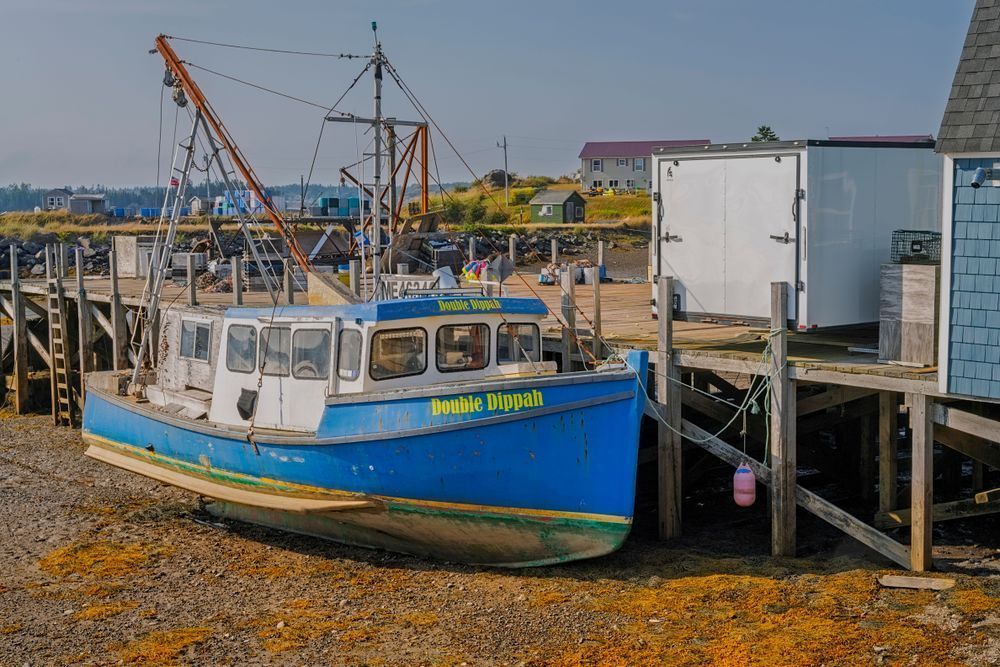
In "Double Dippah," I found myself drawn to the rugged beauty of Beals Island, in downeast Maine, where this old trawler patiently awaited the rising tide.
Beals Island experiences dramatic tidal swings—often 10-12 feet or more—which means boats don't stay afloat at their moorings continuously. This blue trawler sits grounded on the mudflats at low tide, tied to the dock, waiting for the incoming water to lift it again.
The extreme tides define Maine's Downeast coast, creating twice-daily cycles where harbors empty out to reveal the seafloor, then refill hours later. Boats are secured to withstand this constant rise and fall, settling onto the bottom at low tide and floating free at high water.
What makes this scene distinctly Maine is that casual acceptance of tidal reality—the boat resting on its side or keel, completely normal, no cause for concern. The weathered dock pilings show the tide line clearly, marking where water will return. The soft light emphasizes the textures of exposed mud, weathered boat hull, and wooden dock infrastructure in this temporarily waterless harbor.
Extreme tidal range leaves the working trawler grounded, awaiting the tide's return in this Downeast Maine harbor.