Which size is right for your space?
- Living room (above sofa): 48x32
- Bedroom (above headboard): 36x24 or 48x32
- Dining room: 36x24 or 48x32, depending on wall size
- Home office or den: 30x20 or 36x24
- Large foyer or entryway: 48x32
- Hallway, bathroom, or gallery wall: 18x12 or 24x16
When in doubt, go bigger than you think. The art, including any frame, should fill about ⅔ the width of the furniture beneath it. Sizes listed are the photograph itself; framed paper prints, with a 2" mat and frame, are about 3–5" larger in each direction.
See it on your wall before you order
Use the buttons below the image:
- Wall Preview: upload a photo of your room and see this print on your wall in your chosen size and frame.
- Live Preview AR: on your phone or tablet, point your camera at your wall and see the print there in real time.
Framed prints arrive ready to hang
Framed paper prints are matted with a 2" white mat and protected by non-glare acrylic, so the image stays clear without reflections from windows or lights. Acrylic is lighter and safer to ship than glass, and every framed print arrives with hanging hardware already attached.
MetalPrints with a float mount or frame also arrive ready to hang.
Questions about size, material, or framing? See the FAQ or email me a photo of your wall, and I'll suggest a size and finish.
About this photograph
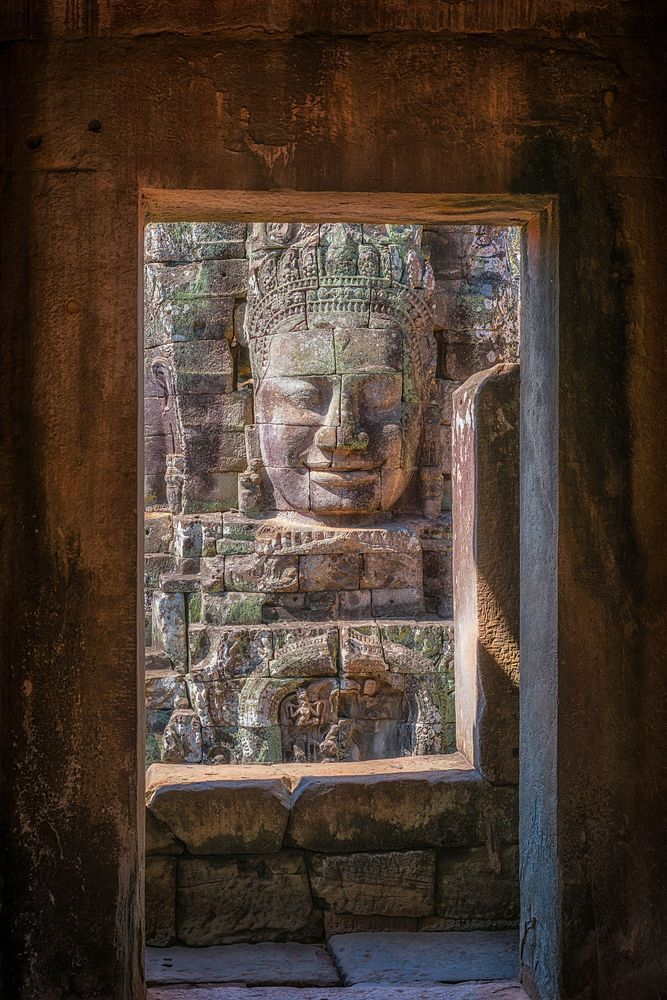
The Bayon temple is famous for those massive stone faces—54 towers, each with four faces looking out in the cardinal directions. Most visitors photograph them from outside, but I found this interior room where one of the faces is perfectly framed by a stone window opening.
The tricky part was timing. I was standing inside while a steady stream of people walked along the exterior balcony, passing right in front of the face. I waited for what felt like forever, watching person after person file past, none of them realizing I was inside trying to capture this specific composition. Eventually my wife managed to get a few people to pause for just a few seconds, giving me the clean frame I wanted.
It's one of my favorite shots from Angkor because it shows the face in a way most people don't see it—isolated, contemplative, framed by the architecture itself rather than competing with a dozen other towers in the background. The Bayon's genius is in that multiplication of the same serene expression across the entire structure, creating this sense of being watched from all directions. But sometimes isolating a single face reveals the craftsmanship more clearly.