Which size is right for your space?
- Living room (above sofa): 48x32
- Bedroom (above headboard): 36x24 or 48x32
- Dining room: 36x24 or 48x32, depending on wall size
- Home office or den: 30x20 or 36x24
- Large foyer or entryway: 48x32
- Hallway, bathroom, or gallery wall: 18x12 or 24x16
When in doubt, go bigger than you think. The art, including any frame, should fill about ⅔ the width of the furniture beneath it. Sizes listed are the photograph itself; framed paper prints, with a 2" mat and frame, are about 3–5" larger in each direction.
See it on your wall before you order
Use the buttons below the image:
- Wall Preview: upload a photo of your room and see this print on your wall in your chosen size and frame.
- Live Preview AR: on your phone or tablet, point your camera at your wall and see the print there in real time.
Framed prints arrive ready to hang
Framed paper prints are matted with a 2" white mat and protected by non-glare acrylic, so the image stays clear without reflections from windows or lights. Acrylic is lighter and safer to ship than glass, and every framed print arrives with hanging hardware already attached.
MetalPrints with a float mount or frame also arrive ready to hang.
Questions about size, material, or framing? See the FAQ or email me a photo of your wall, and I'll suggest a size and finish.
About this photograph
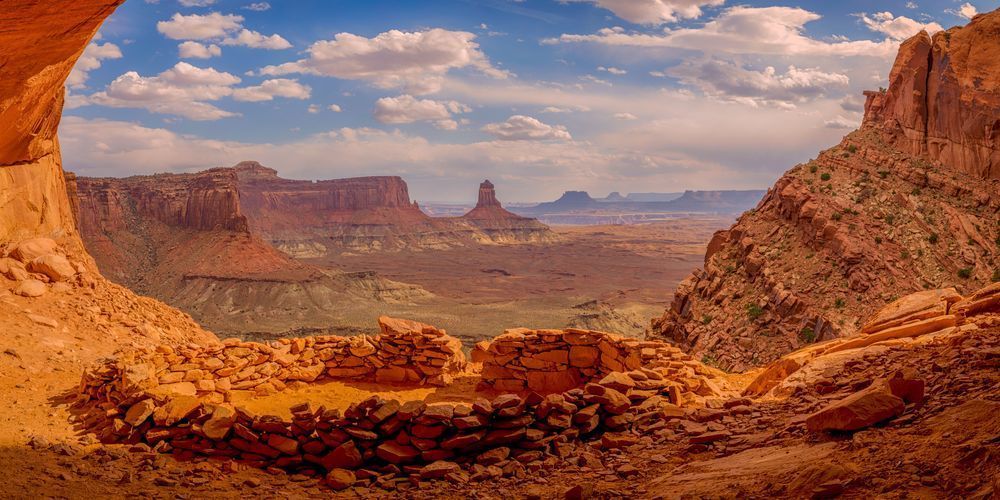
False Kiva sits in a remote alcove in Canyonlands' Island in the Sky district, requiring a scramble up a talus slope to reach. The site features a reconstructed stone circle—the original ancestral Puebloan structure was removed, and what's visible now was built by modern visitors, which creates some controversy about its authenticity and whether people should continue visiting.
The alcove frames a dramatic view westward across the canyon toward the Maze district and beyond. What makes this location compelling photographically is that natural frame—the curved sandstone overhang creating a window onto the vast landscape. The contrast between the sheltered alcove's warm tones and the open canyon's layered geology works because of that defined foreground-to-background relationship.
The challenge is respecting the site's cultural significance while photographing it. This is sensitive archaeology, even if what's visible is reconstruction. The alcove also faces west, making afternoon light ideal for illuminating both the interior and distant canyon.
Natural alcove framing creates depth and emphasizes the contrast between shelter and vast landscape.