Which size is right for your space?
- Living room (above sofa): 48x32
- Bedroom (above headboard): 36x24 or 48x32
- Dining room: 36x24 or 48x32, depending on wall size
- Home office or den: 30x20 or 36x24
- Large foyer or entryway: 48x32
- Hallway, bathroom, or gallery wall: 18x12 or 24x16
When in doubt, go bigger than you think. The art, including any frame, should fill about ⅔ the width of the furniture beneath it. Sizes listed are the photograph itself; framed paper prints, with a 2" mat and frame, are about 3–5" larger in each direction.
See it on your wall before you order
Use the buttons below the image:
- Wall Preview: upload a photo of your room and see this print on your wall in your chosen size and frame.
- Live Preview AR: on your phone or tablet, point your camera at your wall and see the print there in real time.
Framed prints arrive ready to hang
Framed paper prints are matted with a 2" white mat and protected by non-glare acrylic, so the image stays clear without reflections from windows or lights. Acrylic is lighter and safer to ship than glass, and every framed print arrives with hanging hardware already attached.
MetalPrints with a float mount or frame also arrive ready to hang.
Questions about size, material, or framing? See the FAQ or email me a photo of your wall, and I'll suggest a size and finish.
About this photograph
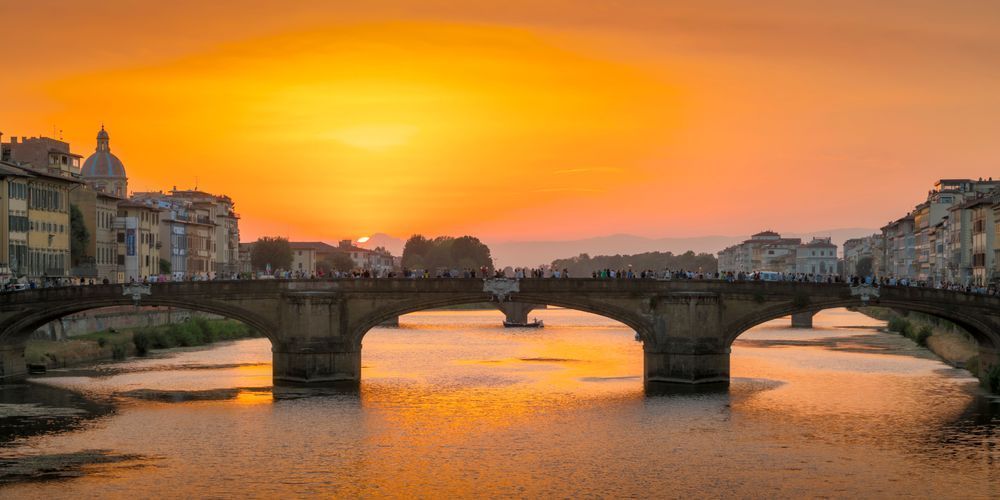
I shot this from the Ponte Vecchio, looking east along the Arno, timing it for that brief window when the sunset colors reflect off the buildings and the water at once. The challenge with Florence at sunset is that it's been done so many times—you need to find the right balance of light that feels both true to the moment and visually compelling.
What drew me to this particular composition was how the buildings step down toward the river, creating layers of warm ochre, sienna, and terracotta that echo the sky's colors. The Arno acts as a mirror, doubling the effect and adding movement through the water's ripples. You get this interplay between the solid, centuries-old architecture and the river's constantly changing surface.
Florence has a quality where the light seems to intensify the stone's warmth—Renaissance architects chose these colors deliberately, knowing how they'd glow in the Tuscan sun. At dusk, that effect becomes even more pronounced, with the buildings seeming to hold onto the day's last light.
The layered warm tones and reflective composition work well in spaces that evoke a sense of calm and timelessness.