Which size is right for your space?
- Living room (above sofa): 48x32
- Bedroom (above headboard): 36x24 or 48x32
- Dining room: 36x24 or 48x32, depending on wall size
- Home office or den: 30x20 or 36x24
- Large foyer or entryway: 48x32
- Hallway, bathroom, or gallery wall: 18x12 or 24x16
When in doubt, go bigger than you think. The art, including any frame, should fill about ⅔ the width of the furniture beneath it. Sizes listed are the photograph itself; framed paper prints, with a 2" mat and frame, are about 3–5" larger in each direction.
See it on your wall before you order
Use the buttons below the image:
- Wall Preview: upload a photo of your room and see this print on your wall in your chosen size and frame.
- Live Preview AR: on your phone or tablet, point your camera at your wall and see the print there in real time.
Framed prints arrive ready to hang
Framed paper prints are matted with a 2" white mat and protected by non-glare acrylic, so the image stays clear without reflections from windows or lights. Acrylic is lighter and safer to ship than glass, and every framed print arrives with hanging hardware already attached.
MetalPrints with a float mount or frame also arrive ready to hang.
Questions about size, material, or framing? See the FAQ or email me a photo of your wall, and I'll suggest a size and finish.
About this photograph
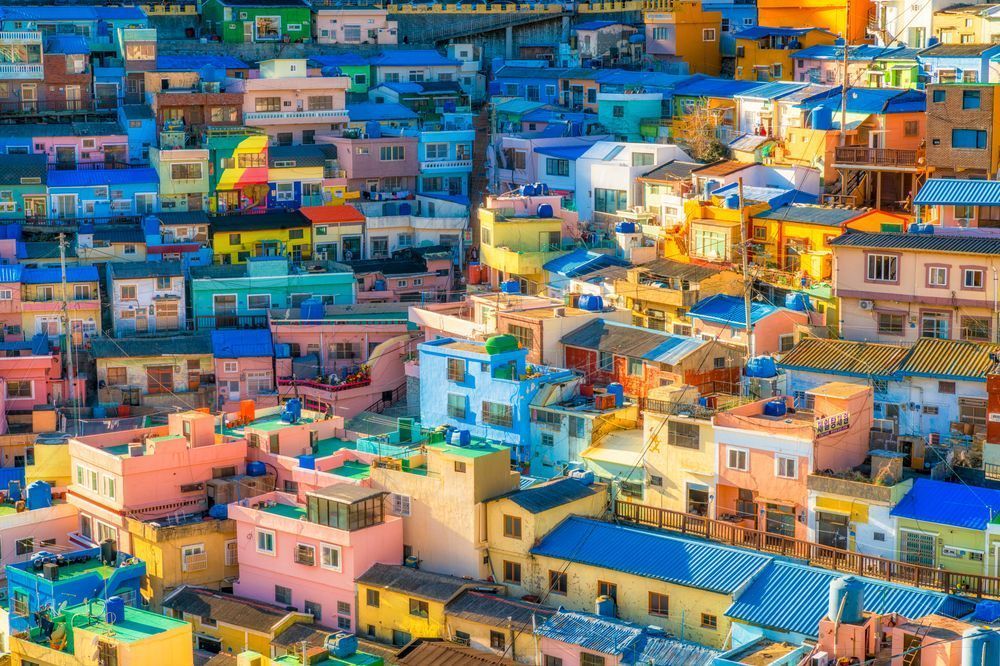
Gamcheon Culture Village wasn't always this colorful. Originally a hillside slum built by Korean War refugees, it was transformed in 2009 through a government art project that brought in artists to paint murals and revitalize the neighborhood. The result is this incredible patchwork of painted houses cascading down the steep terrain.
I photographed from one of the higher viewpoints to capture the density and variety—blues, pinks, yellows, greens all stacked together like a three-dimensional quilt. What makes Gamcheon visually compelling is the tension between order and chaos: the buildings follow the natural contours of the hillside, creating an organic stepped pattern, while each structure maintains its distinct color and character.
The neighborhood has become one of Busan's major tourist draws, which has its complications—gentrification, commercialization, and the usual tensions when art projects revitalize poor areas. But there's still something compelling about how color transforms architecture, how a coat of paint can shift perception from "slum" to "village of art."
The layered composition and saturated colors capture that distinctive Korean approach to urban renewal—bold, unapologetic, visually striking.