Which size is right for your space?
- Living room (above sofa): 48x32
- Bedroom (above headboard): 36x24 or 48x32
- Dining room: 36x24 or 48x32, depending on wall size
- Home office or den: 30x20 or 36x24
- Large foyer or entryway: 48x32
- Hallway, bathroom, or gallery wall: 18x12 or 24x16
When in doubt, go bigger than you think. The art, including any frame, should fill about ⅔ the width of the furniture beneath it. Sizes listed are the photograph itself; framed paper prints, with a 2" mat and frame, are about 3–5" larger in each direction.
See it on your wall before you order
Use the buttons below the image:
- Wall Preview: upload a photo of your room and see this print on your wall in your chosen size and frame.
- Live Preview AR: on your phone or tablet, point your camera at your wall and see the print there in real time.
Framed prints arrive ready to hang
Framed paper prints are matted with a 2" white mat and protected by non-glare acrylic, so the image stays clear without reflections from windows or lights. Acrylic is lighter and safer to ship than glass, and every framed print arrives with hanging hardware already attached.
MetalPrints with a float mount or frame also arrive ready to hang.
Questions about size, material, or framing? See the FAQ or email me a photo of your wall, and I'll suggest a size and finish.
About this photograph
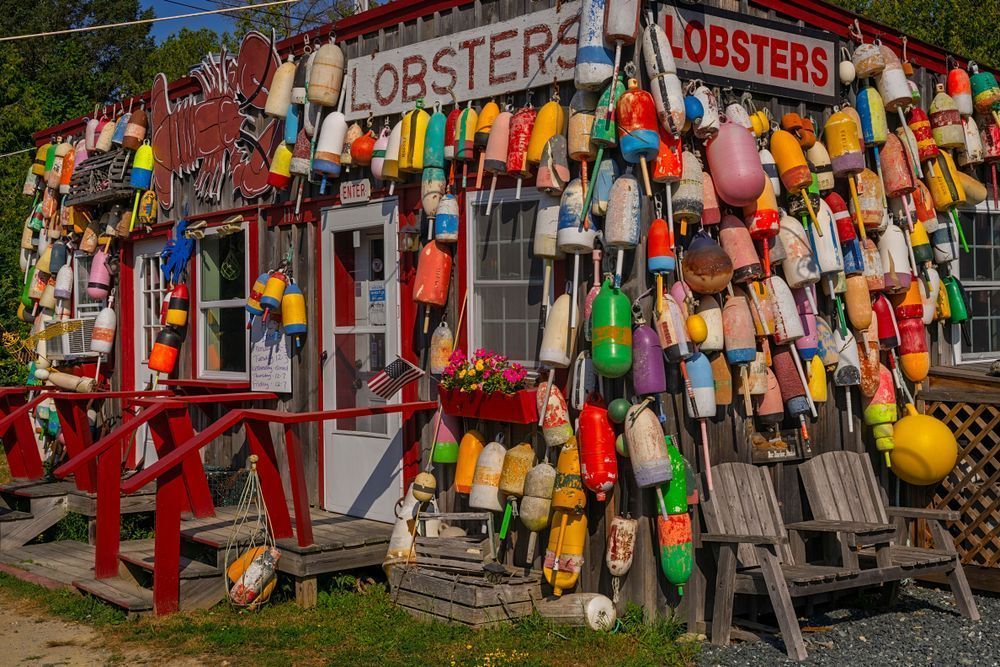
Bar Harbor's lobster shacks often decorate their exteriors with retired lobster buoys, creating these dense colorful displays that serve both as advertising and folk art. Each buoy's paint pattern originally identified a specific lobsterman's traps—registered color combinations that are unique identifiers on the water.
The visual impact comes from the sheer density and variety: dozens of buoys in different color schemes creating an almost overwhelming palette against the weathered wood siding. What could be visual chaos works because of the repetition of form—they're all buoys, all roughly the same size and shape, so the variety in color patterns creates interest without disorder.
These displays are distinctly Maine coastal—you won't find them inland or in other regions. They signal "authentic lobster shack" to tourists while celebrating the local fishing heritage. The weathered buoys show genuine use: faded paint, dings, saltwater staining—the patina of actual working gear retired from the water.
Dense buoy display creates colorful folk art celebrating Bar Harbor's lobstering heritage and working waterfront identity.