Which size is right for your space?
- Living room (above sofa): 48x32
- Bedroom (above headboard): 36x24 or 48x32
- Dining room: 36x24 or 48x32, depending on wall size
- Home office or den: 30x20 or 36x24
- Large foyer or entryway: 48x32
- Hallway, bathroom, or gallery wall: 18x12 or 24x16
When in doubt, go bigger than you think. The art, including any frame, should fill about ⅔ the width of the furniture beneath it. Sizes listed are the photograph itself; framed paper prints, with a 2" mat and frame, are about 3–5" larger in each direction.
See it on your wall before you order
Use the buttons below the image:
- Wall Preview: upload a photo of your room and see this print on your wall in your chosen size and frame.
- Live Preview AR: on your phone or tablet, point your camera at your wall and see the print there in real time.
Framed prints arrive ready to hang
Framed paper prints are matted with a 2" white mat and protected by non-glare acrylic, so the image stays clear without reflections from windows or lights. Acrylic is lighter and safer to ship than glass, and every framed print arrives with hanging hardware already attached.
MetalPrints with a float mount or frame also arrive ready to hang.
Questions about size, material, or framing? See the FAQ or email me a photo of your wall, and I'll suggest a size and finish.
About this photograph
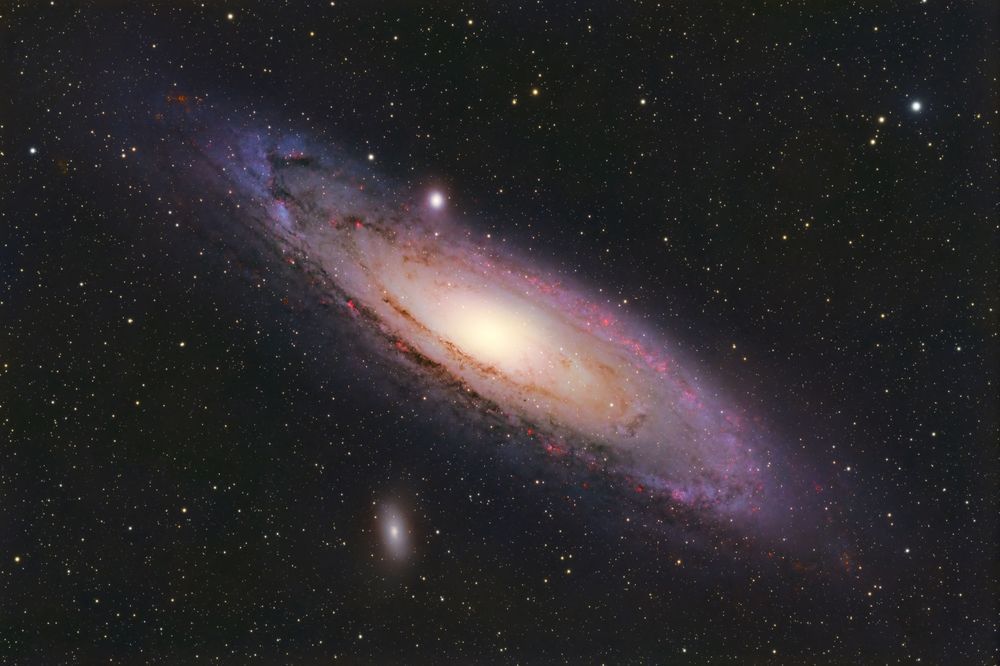
The Andromeda Galaxy, or M31, stands as a remarkable testament to the wonders of our universe. Captured over three nights from the urban skies of Phoenix, this photograph reveals the intricate details of a galaxy that lies 2.5 million light-years away. The image showcases the galaxy's central core, delicate dust lanes, and hints of its spiral structure, all brought to life through a meticulous stacking of over 250 RGB images. Each layer adds depth, allowing you to appreciate the beauty of this cosmic neighbor.
As you gaze upon this photograph, consider the fascinating story it tells. Andromeda is not just a distant object; it is a poignant reminder of the vastness of space and the eventual collision with our own Milky Way, which is set to occur billions of years from now. The light you see from its front reaches us 65,000 years before it reaches us from its rear, creating a unique distortion in both space and time. This captivating phenomenon invites you to reflect on the mysteries of the cosmos.