Which size is right for your space?
- Living room (above sofa): 48x32
- Bedroom (above headboard): 36x24 or 48x32
- Dining room: 36x24 or 48x32, depending on wall size
- Home office or den: 30x20 or 36x24
- Large foyer or entryway: 48x32
- Hallway, bathroom, or gallery wall: 18x12 or 24x16
When in doubt, go bigger than you think. The art, including any frame, should fill about ⅔ the width of the furniture beneath it. Sizes listed are the photograph itself; framed paper prints, with a 2" mat and frame, are about 3–5" larger in each direction.
See it on your wall before you order
Use the buttons below the image:
- Wall Preview: upload a photo of your room and see this print on your wall in your chosen size and frame.
- Live Preview AR: on your phone or tablet, point your camera at your wall and see the print there in real time.
Framed prints arrive ready to hang
Framed paper prints are matted with a 2" white mat and protected by non-glare acrylic, so the image stays clear without reflections from windows or lights. Acrylic is lighter and safer to ship than glass, and every framed print arrives with hanging hardware already attached.
MetalPrints with a float mount or frame also arrive ready to hang.
Questions about size, material, or framing? See the FAQ or email me a photo of your wall, and I'll suggest a size and finish.
About this photograph
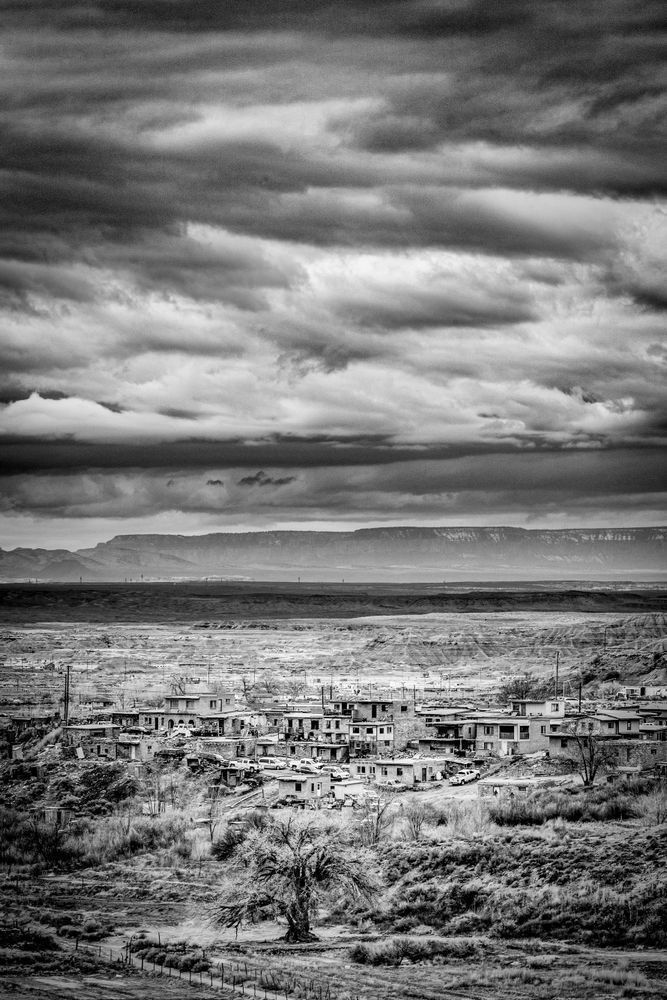
Moenkopi Pueblo, a Hopi village visible from the roadside near Tuba City, Arizona, shows layers of occupation and abandonment—some structures still in use, others deteriorating back into the landscape. The settlement sits below the highway, traditional stone and adobe buildings against the dramatic northern Arizona plateau country.
Converting to black and white emphasizes the stark character: weathered building textures, the gnarled tree in the foreground, the distant mesa formations, and storm clouds creating dramatic sky. Monochrome removes the warm desert color palette, focusing on form, texture, and the tonal relationship between human structures and natural landscape.
The overcast storm light provides even illumination without harsh shadows while the threatening sky adds atmosphere. Black and white suits this subject by creating documentary quality—emphasizing the buildings' material reality and environmental context rather than picturesque Southwest color. The composition frames occupied indigenous space, requiring respectful treatment that acknowledges this is living community, not historical ruin.
Monochrome treatment emphasizes weathered architecture and dramatic landscape at this occupied Hopi village near Tuba City.