Which size is right for your space?
- Living room (above sofa): 48x32
- Bedroom (above headboard): 36x24 or 48x32
- Dining room: 36x24 or 48x32, depending on wall size
- Home office or den: 30x20 or 36x24
- Large foyer or entryway: 48x32
- Hallway, bathroom, or gallery wall: 18x12 or 24x16
When in doubt, go bigger than you think. The art, including any frame, should fill about ⅔ the width of the furniture beneath it. Sizes listed are the photograph itself; framed paper prints, with a 2" mat and frame, are about 3–5" larger in each direction.
See it on your wall before you order
Use the buttons below the image:
- Wall Preview: upload a photo of your room and see this print on your wall in your chosen size and frame.
- Live Preview AR: on your phone or tablet, point your camera at your wall and see the print there in real time.
Framed prints arrive ready to hang
Framed paper prints are matted with a 2" white mat and protected by non-glare acrylic, so the image stays clear without reflections from windows or lights. Acrylic is lighter and safer to ship than glass, and every framed print arrives with hanging hardware already attached.
MetalPrints with a float mount or frame also arrive ready to hang.
Questions about size, material, or framing? See the FAQ or email me a photo of your wall, and I'll suggest a size and finish.
About this photograph
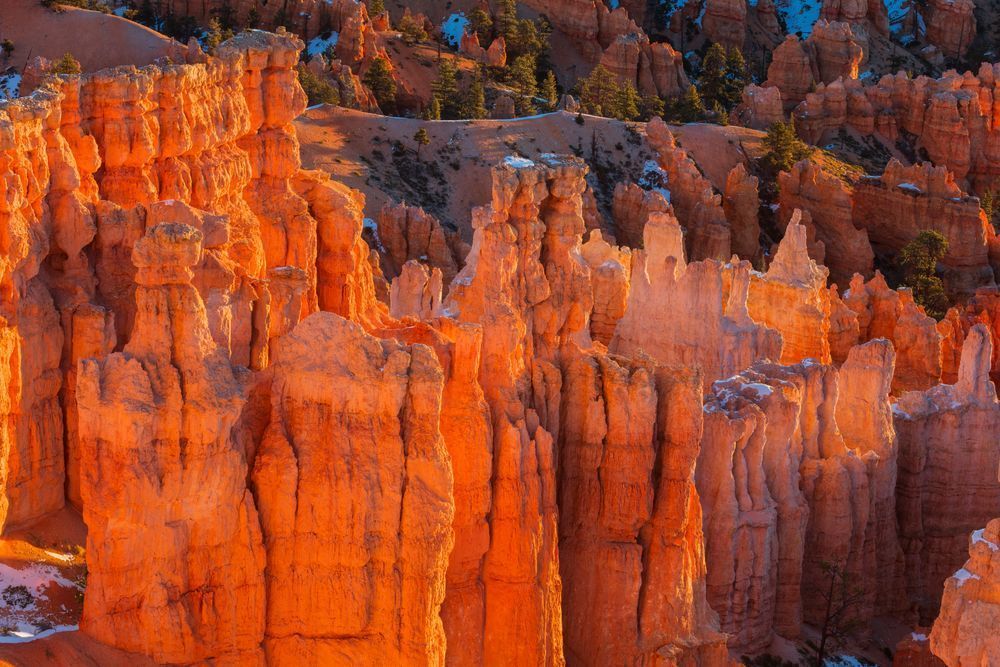
Early winter mornings at Bryce Canyon offer ideal conditions for photographing the hoodoos—crisp air, often fresh snow, and that low-angle sunlight that brings out the intense orange in the Claron Formation limestone. The hoodoos are formed through frost-wedging: water seeps into cracks, freezes, expands, and gradually breaks the rock into these distinctive spires and fins.
Winter light hits differently here than summer. The sun stays lower on the horizon, creating longer shadows that emphasize the three-dimensional quality of the formations, while the warm light contrasts beautifully with any snow that's accumulated on the rocks and surrounding pine trees.
This shot from one of the rim viewpoints captures that brief window when direct sunlight illuminates the hoodoos' faces while the amphitheater below still holds cooler tones in shadow. The color comes from iron oxide in the limestone—the same geological process that creates the orange, but winter light and snow make it more dramatic.
Low winter sun and fresh snow emphasize the hoodoos' warm tones and sculptural forms.