Which size is right for your space?
- Living room (above sofa): 48x32
- Bedroom (above headboard): 36x24 or 48x32
- Dining room: 36x24 or 48x32, depending on wall size
- Home office or den: 30x20 or 36x24
- Large foyer or entryway: 48x32
- Hallway, bathroom, or gallery wall: 18x12 or 24x16
When in doubt, go bigger than you think. The art, including any frame, should fill about ⅔ the width of the furniture beneath it. Sizes listed are the photograph itself; framed paper prints, with a 2" mat and frame, are about 3–5" larger in each direction.
See it on your wall before you order
Use the buttons below the image:
- Wall Preview: upload a photo of your room and see this print on your wall in your chosen size and frame.
- Live Preview AR: on your phone or tablet, point your camera at your wall and see the print there in real time.
Framed prints arrive ready to hang
Framed paper prints are matted with a 2" white mat and protected by non-glare acrylic, so the image stays clear without reflections from windows or lights. Acrylic is lighter and safer to ship than glass, and every framed print arrives with hanging hardware already attached.
MetalPrints with a float mount or frame also arrive ready to hang.
Questions about size, material, or framing? See the FAQ or email me a photo of your wall, and I'll suggest a size and finish.
About this photograph
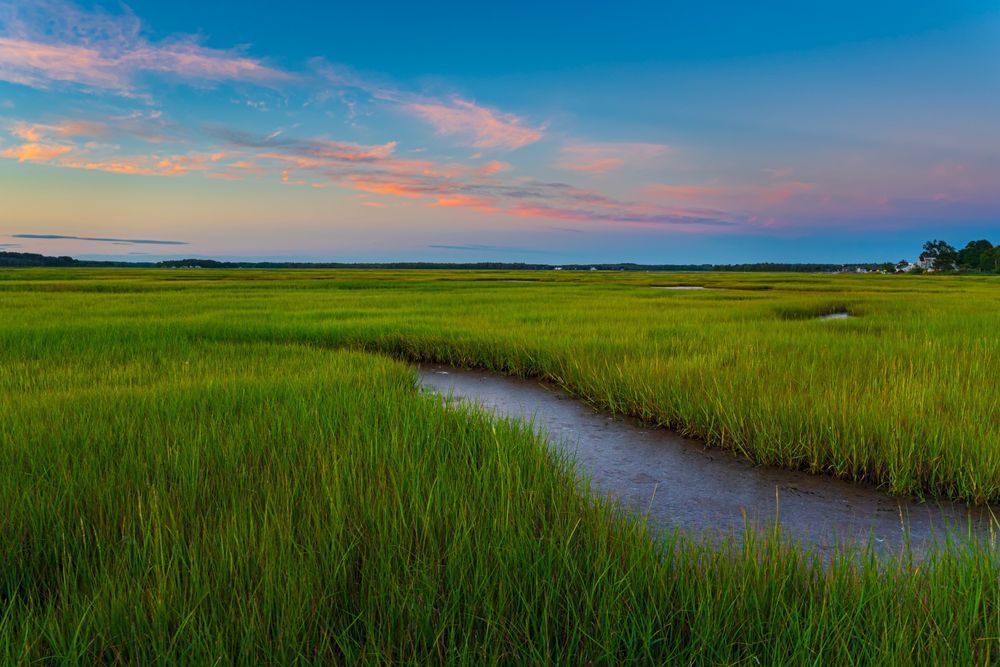
Scarborough's salt marshes along the southern Maine coast transform at sunset when the winding tidal channels reflect the sky's colors. These coastal wetlands are ecologically vital—nurseries for fish, feeding grounds for shorebirds—and visually compelling when the light is right.
The challenge with marsh photography is finding composition in what can appear as undifferentiated grass. The meandering water channel provides a natural leading line through the frame, while the distant tree line creates depth and prevents the scene from feeling too flat. The transitional light—that window between sunset and dusk—paints the sky in blues, oranges, and pinks that mirror in the still water.
Salt marsh grasses show different colors depending on season and tidal cycle. The green here indicates either late spring or summer growth. Low tide exposes more of the channel structure, creating stronger compositional elements than high tide when water covers the marsh floor.
Sunset light and tidal channels create color and leading lines through Maine's coastal marsh landscape.