Which size is right for your space?
- Living room (above sofa): 48x32
- Bedroom (above headboard): 36x24 or 48x32
- Dining room: 36x24 or 48x32, depending on wall size
- Home office or den: 30x20 or 36x24
- Large foyer or entryway: 48x32
- Hallway, bathroom, or gallery wall: 18x12 or 24x16
When in doubt, go bigger than you think. The art, including any frame, should fill about ⅔ the width of the furniture beneath it. Sizes listed are the photograph itself; framed paper prints, with a 2" mat and frame, are about 3–5" larger in each direction.
See it on your wall before you order
Use the buttons below the image:
- Wall Preview: upload a photo of your room and see this print on your wall in your chosen size and frame.
- Live Preview AR: on your phone or tablet, point your camera at your wall and see the print there in real time.
Framed prints arrive ready to hang
Framed paper prints are matted with a 2" white mat and protected by non-glare acrylic, so the image stays clear without reflections from windows or lights. Acrylic is lighter and safer to ship than glass, and every framed print arrives with hanging hardware already attached.
MetalPrints with a float mount or frame also arrive ready to hang.
Questions about size, material, or framing? See the FAQ or email me a photo of your wall, and I'll suggest a size and finish.
About this photograph
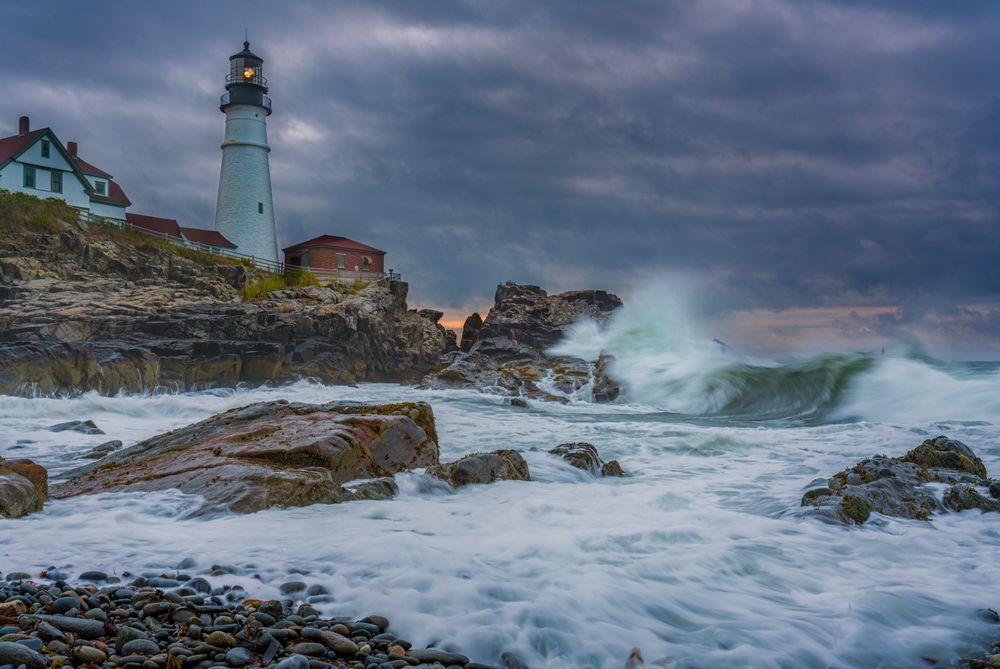
I photographed Portland Head Light during a coastal storm—enough weather to create dramatic wave action and that heavy, fast-moving cloud cover. The waves were hitting the rocks hard, sending spray high into the air. I climbed down to the cobble beach in the small cove to get a lower angle that would emphasize the power of the surf against the solidity of the lighthouse built on the headland.
Portland Head Light has been guiding ships since 1791, and it's survived countless storms far worse than this one. What makes it compelling photographically is that contrast—the permanence of the structure against the constantly changing sea. During a storm, that tension becomes visible: waves exploding against rocks, dark clouds moving fast overhead, but the lighthouse standing exactly where it's stood for over two centuries.
I set up the tripod low and used a faster shutter speed to freeze the wave action rather than blur it. I wanted to capture the violence of the water, the spray caught mid-air, the texture of the churning surf. The dramatic sky provided natural contrast, so I didn't need to manipulate the exposure too much.
Shooting in these conditions means protecting your gear from salt spray while staying stable on wet cobbles. But that's when you get the most dynamic coastal images—when the weather is doing something worth documenting.
The stormy conditions and dynamic wave action create energy and drama in the composition.