Which size is right for your space?
- Living room (above sofa): 48x32
- Bedroom (above headboard): 36x24 or 48x32
- Dining room: 36x24 or 48x32, depending on wall size
- Home office or den: 30x20 or 36x24
- Large foyer or entryway: 48x32
- Hallway, bathroom, or gallery wall: 18x12 or 24x16
When in doubt, go bigger than you think. The art, including any frame, should fill about ⅔ the width of the furniture beneath it. Sizes listed are the photograph itself; framed paper prints, with a 2" mat and frame, are about 3–5" larger in each direction.
See it on your wall before you order
Use the buttons below the image:
- Wall Preview: upload a photo of your room and see this print on your wall in your chosen size and frame.
- Live Preview AR: on your phone or tablet, point your camera at your wall and see the print there in real time.
Framed prints arrive ready to hang
Framed paper prints are matted with a 2" white mat and protected by non-glare acrylic, so the image stays clear without reflections from windows or lights. Acrylic is lighter and safer to ship than glass, and every framed print arrives with hanging hardware already attached.
MetalPrints with a float mount or frame also arrive ready to hang.
Questions about size, material, or framing? See the FAQ or email me a photo of your wall, and I'll suggest a size and finish.
About this photograph
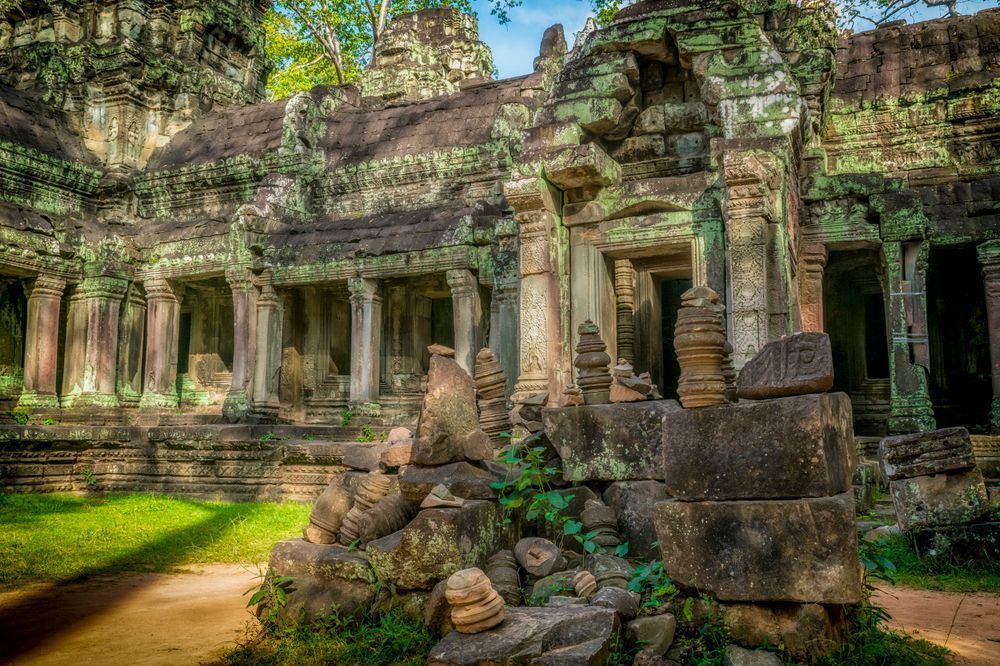
The library at Ta Prohm is where you really see nature reclaiming the temple. Massive tree roots snake through doorways and over walls, creating this incredible fusion of architecture and jungle. Standing there, I couldn't help but imagine the scholars who once studied in these halls, surrounded by palm-leaf manuscripts and carved stone.
I waited for the light to filter through the canopy just right—that's what gives the weathered stone and intricate carvings their depth. The textures tell the story: centuries of monsoons, the slow work of roots breaking through mortar, delicate apsara figures still visible despite it all.
What draws me to Ta Prohm is that tension between preservation and decay. Do you clear the trees and restore the temple, or do you let the jungle continue its work? The Cambodian authorities chose something in between, and the result is this haunting balance that you can't find anywhere else.
The interplay of light and shadow in this image creates natural depth that works well in contemplative spaces. It's one of those photographs where you notice new details each time—a carved lintel, the way a root wraps around a column, the play of dappled sunlight on stone.