Which size is right for your space?
- Living room (above sofa): 48x32
- Bedroom (above headboard): 36x24 or 48x32
- Dining room: 36x24 or 48x32, depending on wall size
- Home office or den: 30x20 or 36x24
- Large foyer or entryway: 48x32
- Hallway, bathroom, or gallery wall: 18x12 or 24x16
When in doubt, go bigger than you think. The art, including any frame, should fill about ⅔ the width of the furniture beneath it. Sizes listed are the photograph itself; framed paper prints, with a 2" mat and frame, are about 3–5" larger in each direction.
See it on your wall before you order
Use the buttons below the image:
- Wall Preview: upload a photo of your room and see this print on your wall in your chosen size and frame.
- Live Preview AR: on your phone or tablet, point your camera at your wall and see the print there in real time.
Framed prints arrive ready to hang
Framed paper prints are matted with a 2" white mat and protected by non-glare acrylic, so the image stays clear without reflections from windows or lights. Acrylic is lighter and safer to ship than glass, and every framed print arrives with hanging hardware already attached.
MetalPrints with a float mount or frame also arrive ready to hang.
Questions about size, material, or framing? See the FAQ or email me a photo of your wall, and I'll suggest a size and finish.
About this photograph
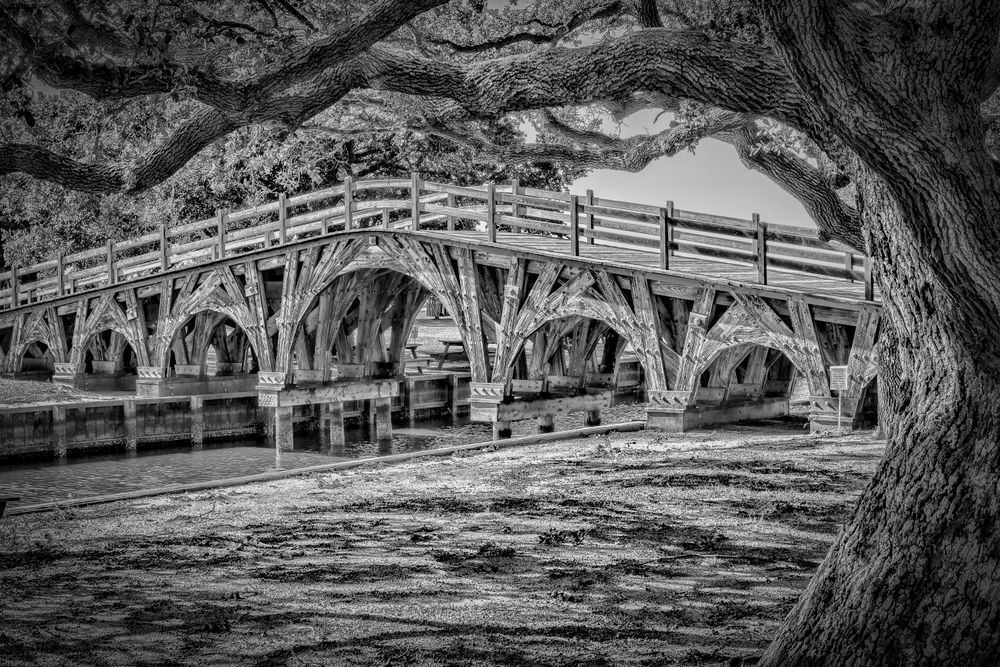
Wooden footbridges along coastal walkways that cross over streams and inlets create compositional opportunities where human-made structures meet the natural environment. This bridge's arched supports and textured railings, framed by a large tree trunk in the foreground, work well in black and white where the interplay between architectural geometry and organic forms becomes more prominent.
Converting to monochrome emphasizes texture: weathered wood grain in the bridge structure, rough tree bark in the foreground, the contrast between constructed and natural elements. Early morning light—soft and directional without harsh midday intensity—creates tonal gradation that defines forms without extreme shadows. The monochrome palette reveals subtle differences between the bridge's aged wood and the tree's bark that color might obscure.
The challenge is balancing the dark tree trunk framing the composition against the lighter bridge and background without losing detail in either shadowed or highlighted areas. Black and white suits this subject by emphasizing structural and natural textures equally.
Monochrome treatment emphasizes textural contrast between weathered bridge structure and natural forest framing elements.